Our story
It started because I couldn't buy it.
Myble didn't start from a business plan. It started from a piece of furniture that didn't exist, and three weekends of my life spent making one.
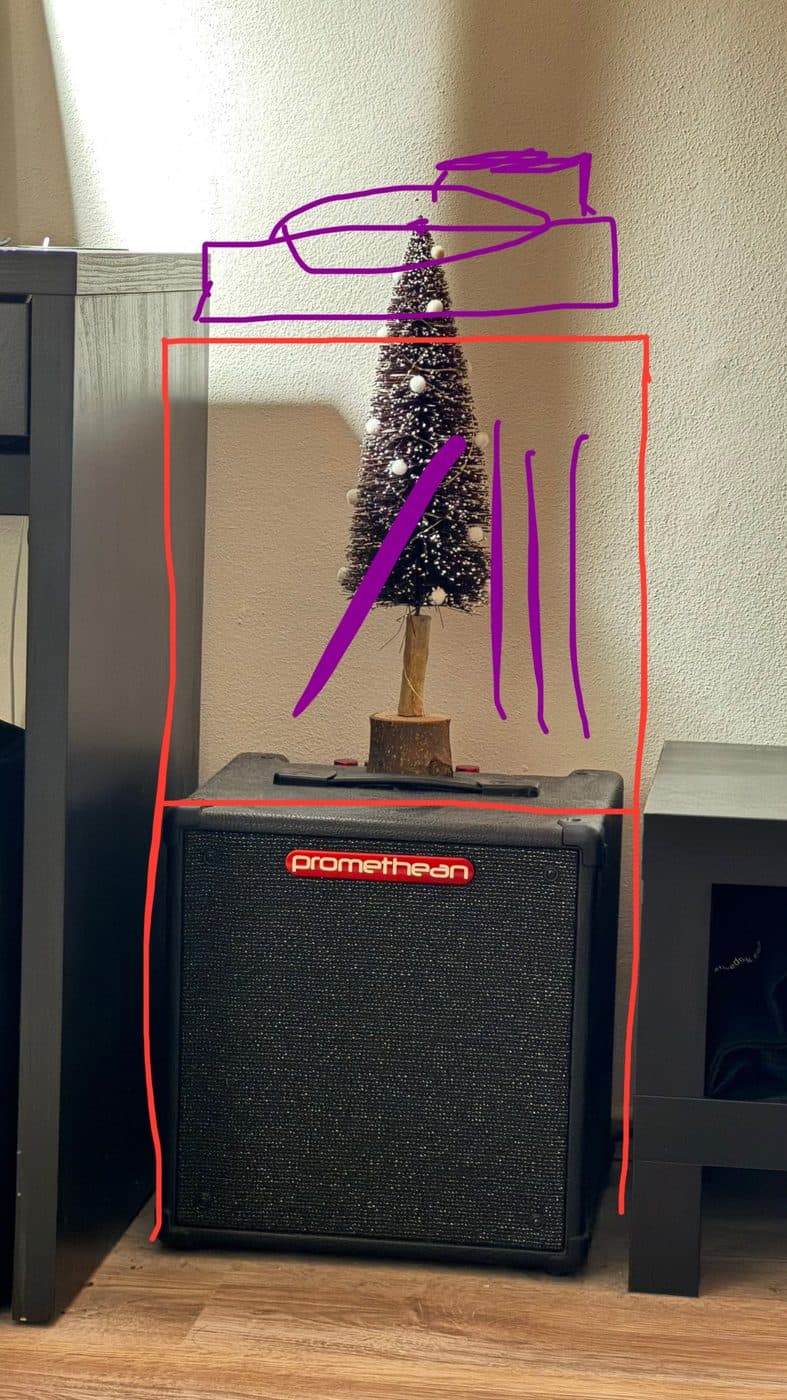
The brief: one drawing, one wall, one very specific gap.
The thing I couldn't buy
I needed one very specific thing. A speaker at the bottom. Records in the middle. A turntable on top. The right height, the right width, the right depth for the corner it had to live in.
I looked. Nobody makes that. Not in that size, not for that money. The closest thing was always too tall, too shallow, or built for someone else's room.
So I drew it onto a photo of my own wall, and decided to build it myself.
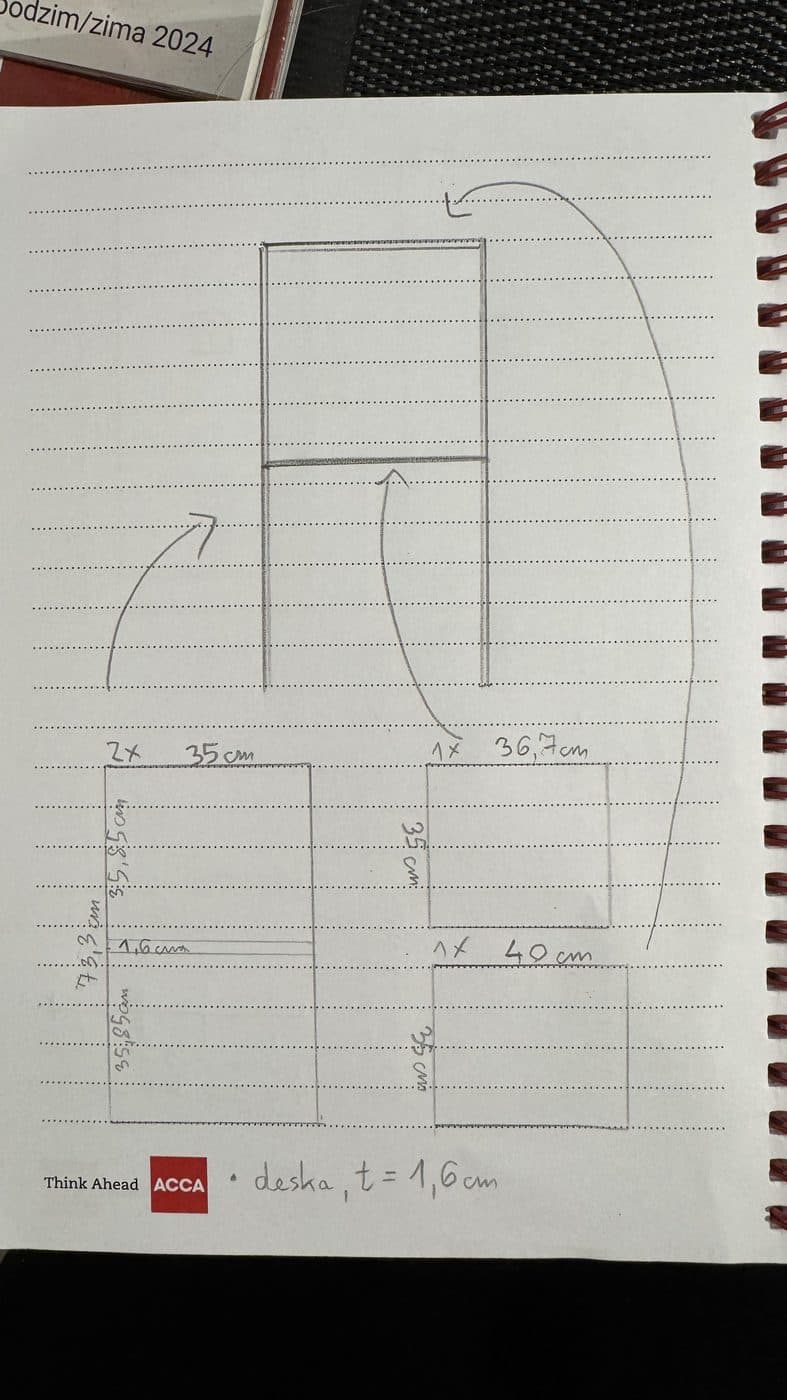
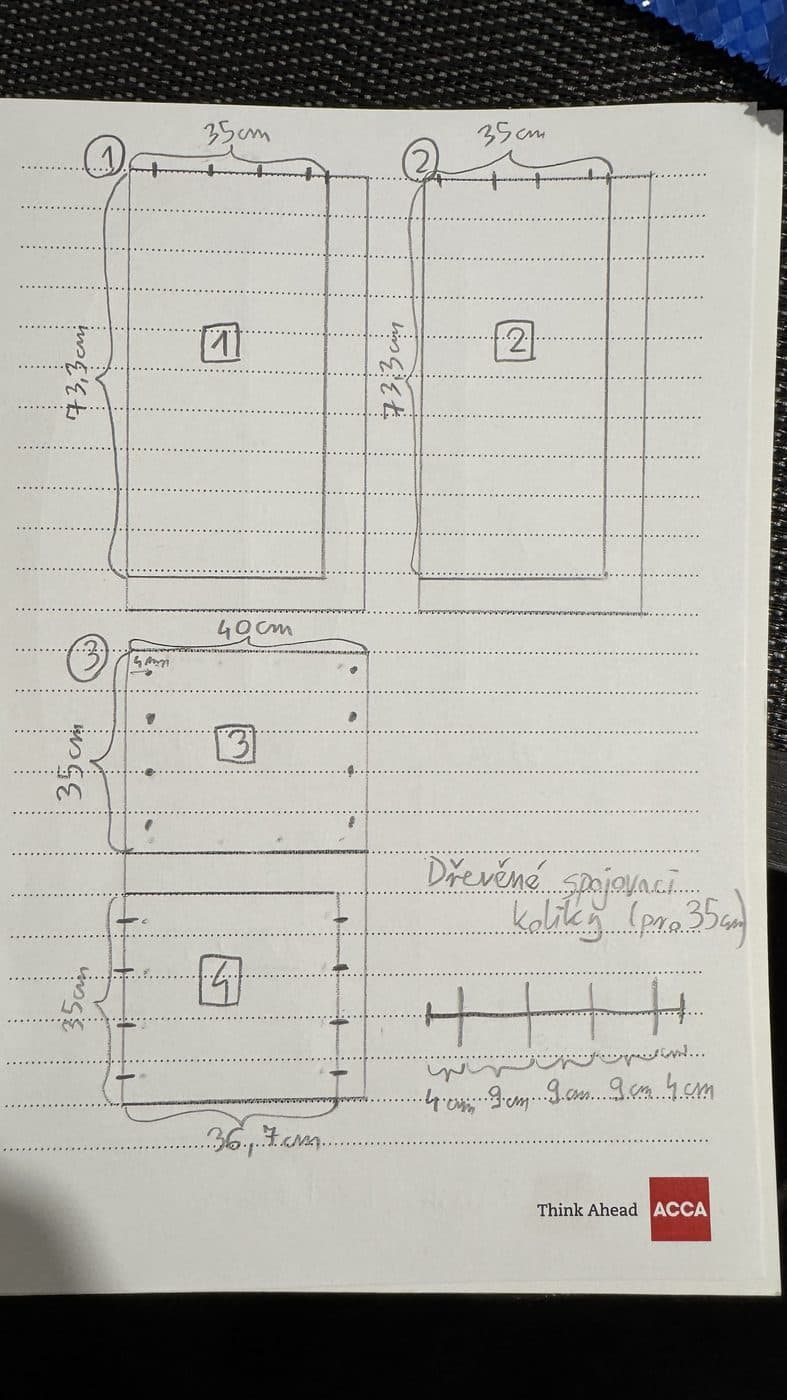
Two evenings in a notebook, to describe a box.
Two evenings of arithmetic
Then came the part nobody warns you about: the maths.
Every panel, to the millimetre. Which piece overlaps which. How thick the board is, and what that does to every other dimension. Where the dowels go, 4, 9, 9, 9, 4, and what happens to the whole thing if one of them is 2 mm off.
Two evenings and a notebook later, I had a cut list. Four panels. 73.3 × 35. 40 × 35. 36.7 × 35. Board thickness 1.6 cm.
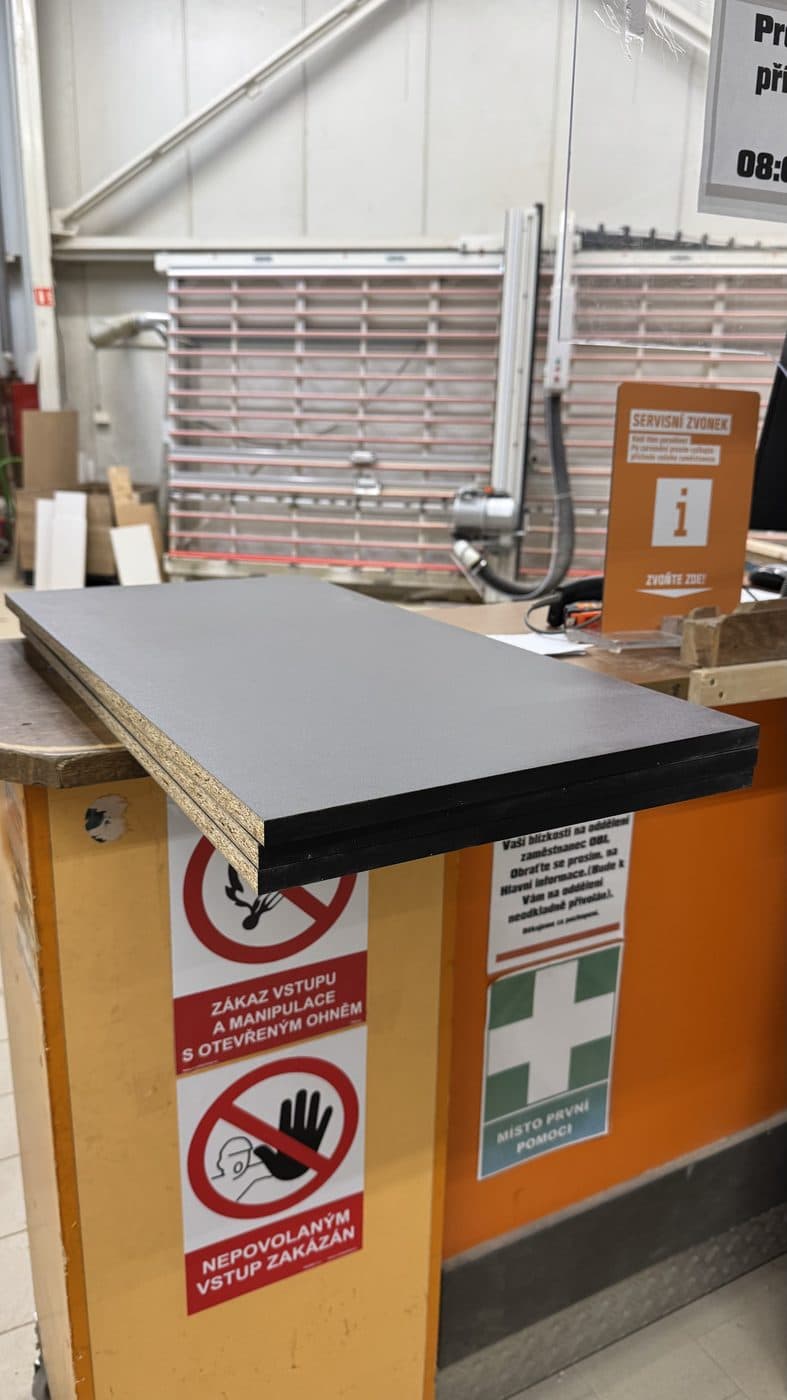
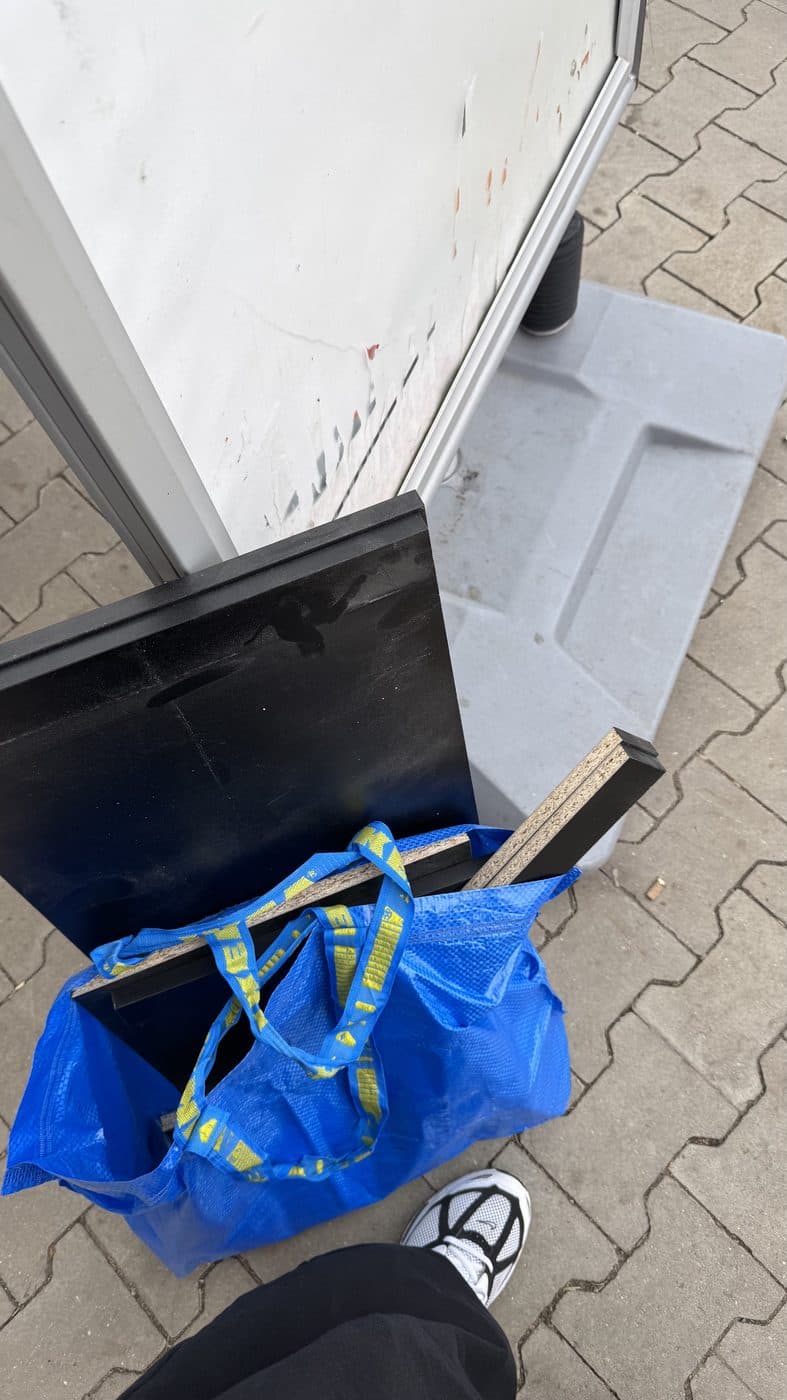
Cut to size at a counter. Carried home in a bag.
A queue, a saw, and a tram ride
Next: a shop on the other side of town that sells board by the whole sheet.
You don't buy four panels. You buy one big sheet and ask them to cut it into four, at a counter, in a queue, hoping you wrote your numbers down right, because you can't un-cut a board.
Then you carry it home. Raw panels, a plastic bag, a tram. The pieces were finally the right size. I still had nothing that looked like furniture.
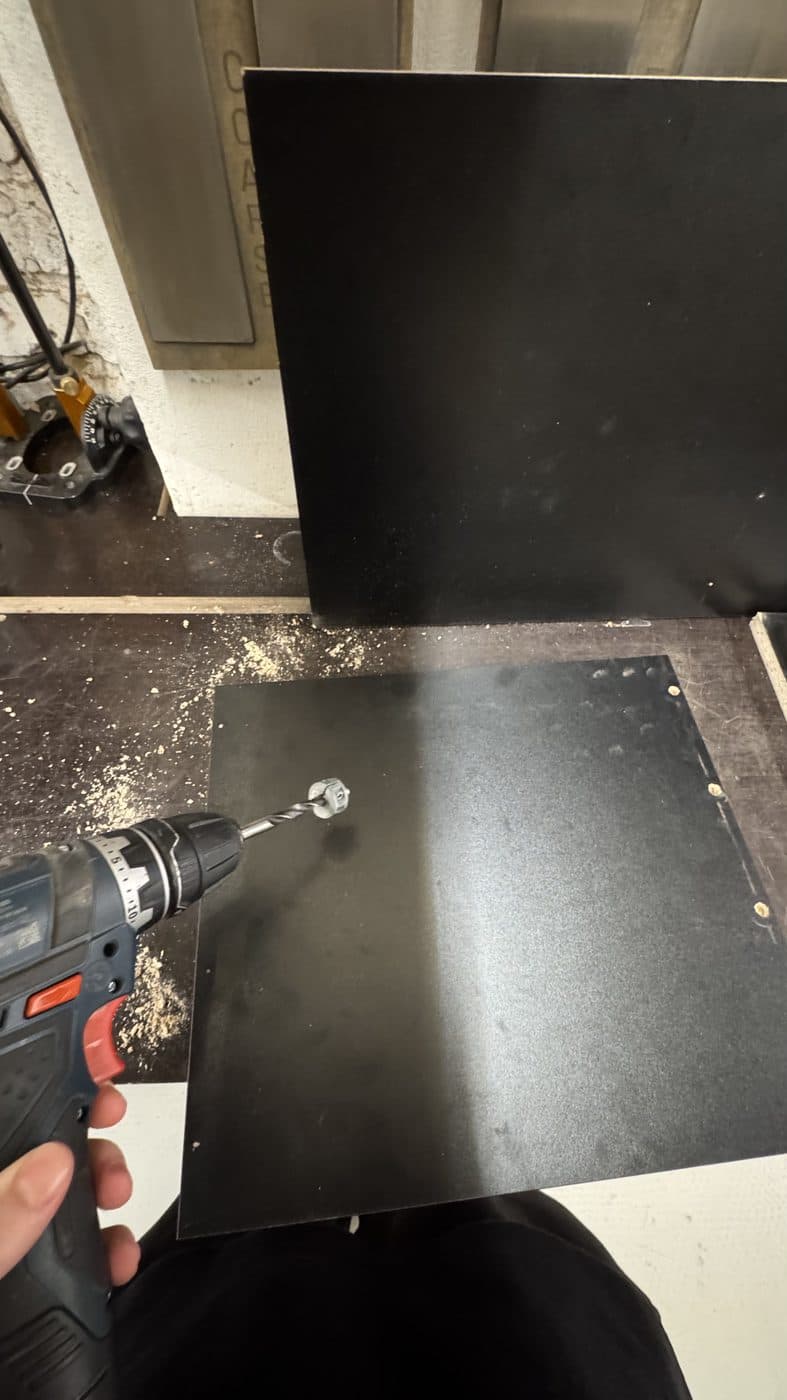
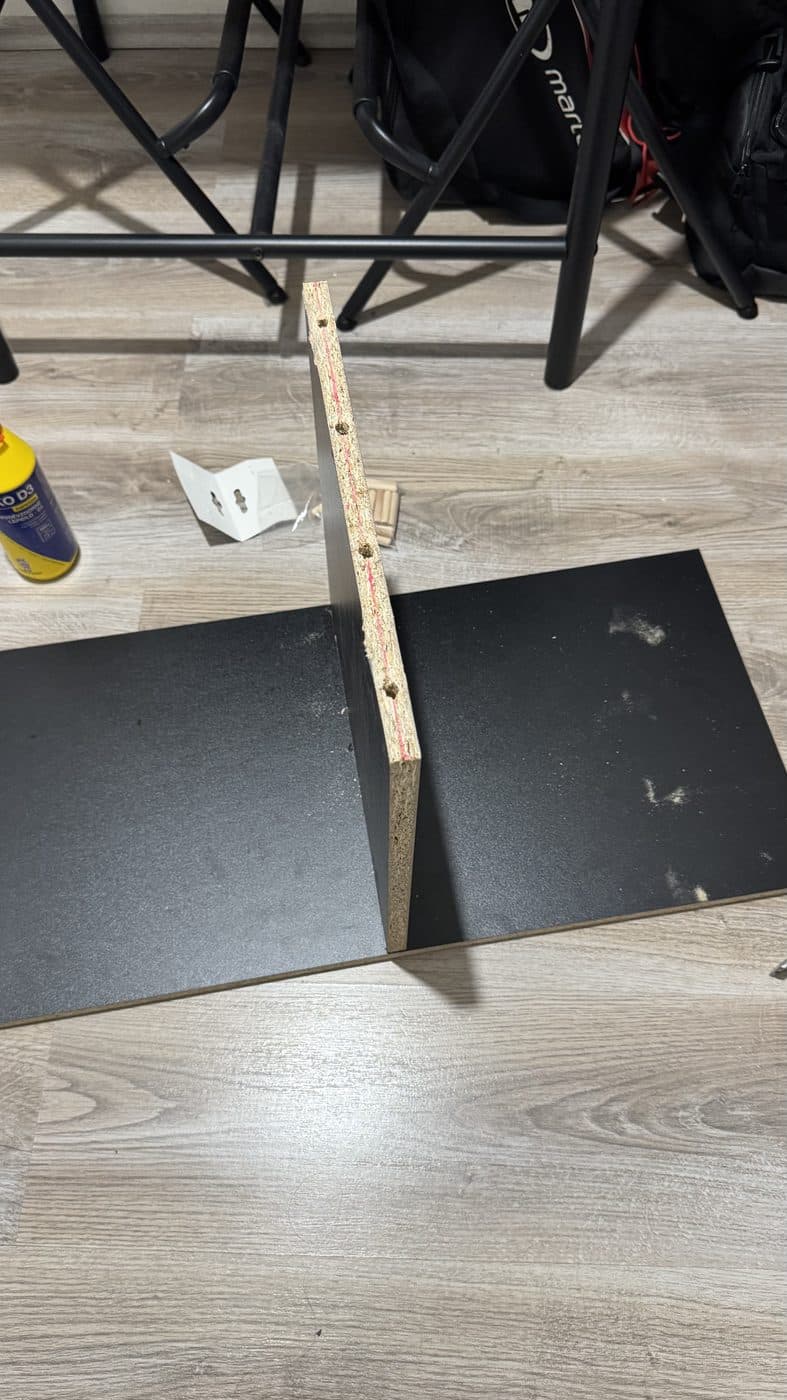
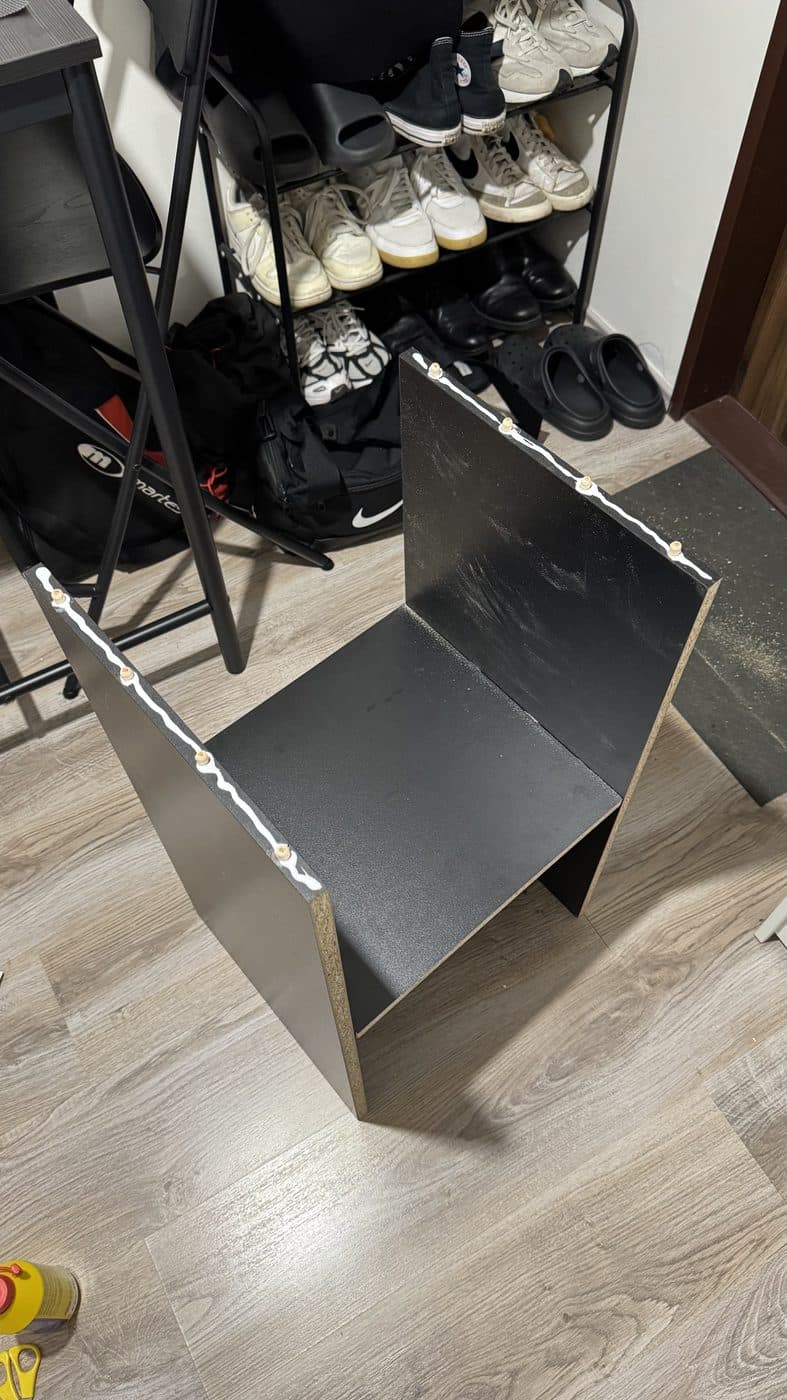
Rented drill, rented hour. Twelve holes that all had to be right.
I don't own a drill
Most people living in a flat don't.
So I booked an hour in a workshop you can rent by the hour, hauled my panels across the city a second time, and drilled every dowel hole myself, square to the face, right depth, right spacing. A couple of millimetres off and the panel doesn't sit flush.
Back home: glue, dowels, and the slow part where you find out whether all that arithmetic was right.
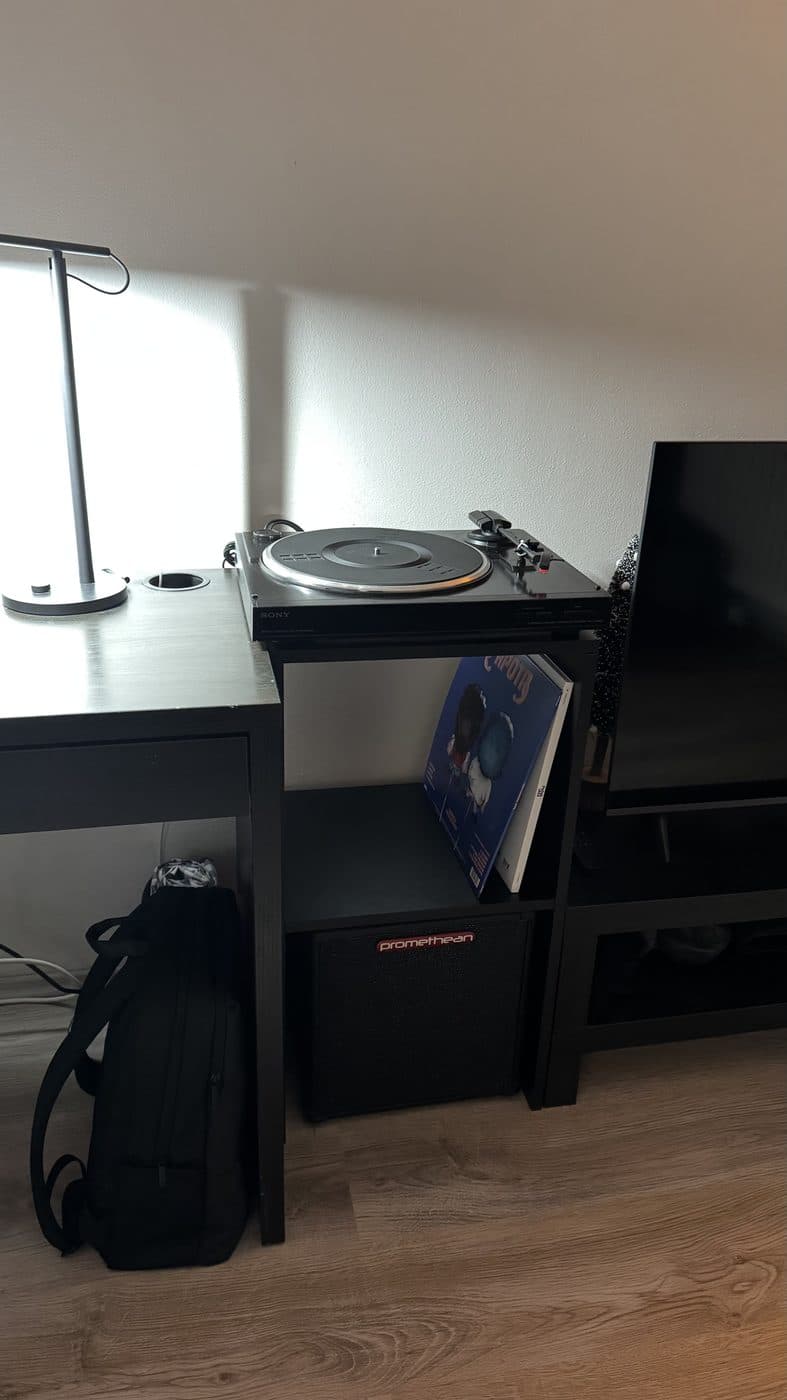
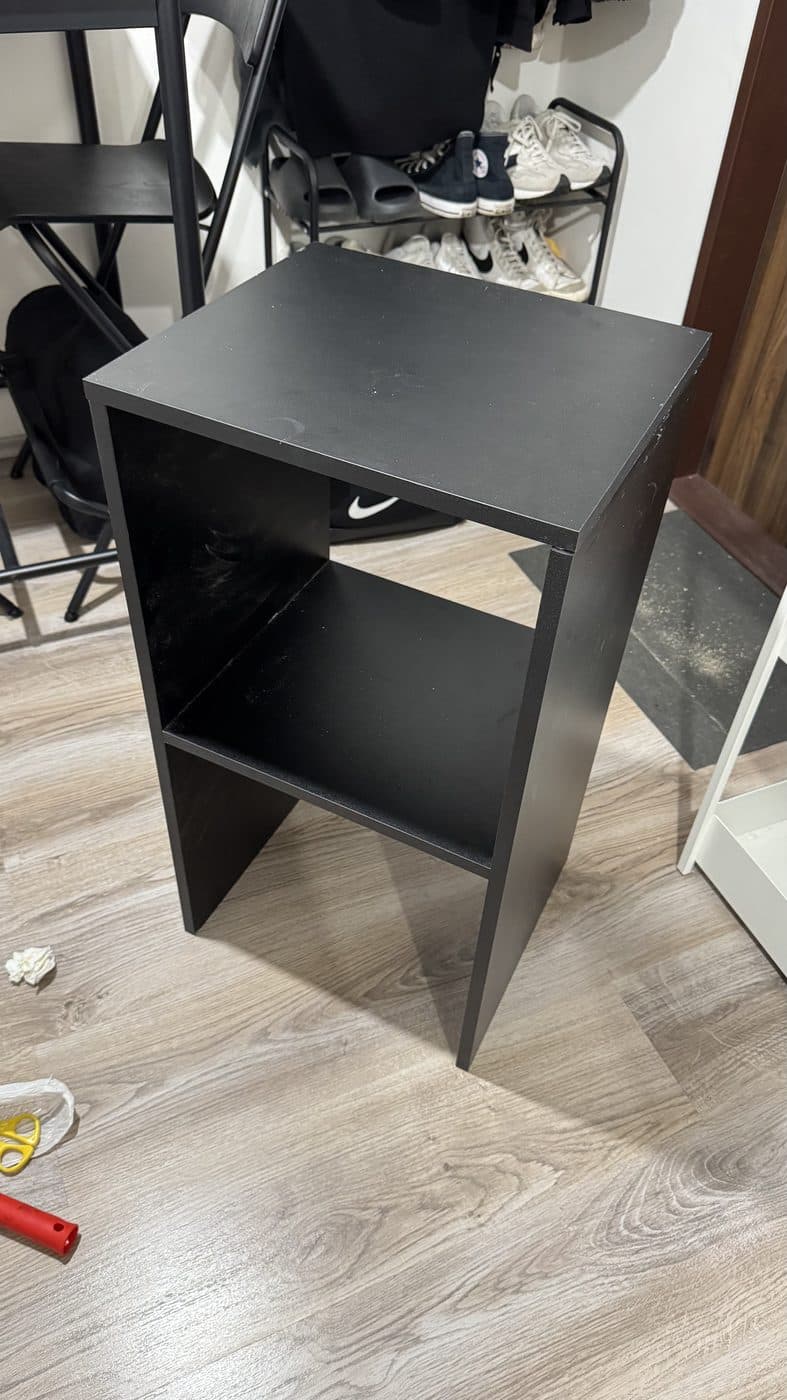
Left: the drawing. Right: the same thing, three weekends later.
It fits
It fit. Exactly, to the centimetre, the way it did on paper.
Speaker at the bottom. Records in the middle. Turntable on top. The thing I'd drawn over a photo of my own wall, now standing against that wall.
I was proud of it. I still am.
But look at what it cost
Not the materials. Those were cheap.
The design cost. The measuring, and the re-measuring. A trip across town for boards, another for a drill I don't own, an evening spent deciding whether 1.6 cm of board thickness comes off the shelf or off the sides.
Weeks of it. For one piece of furniture that fits one wall.
And that isn't a hobbyist's problem. It's everyone's: anyone with an awkward alcove, a sloped ceiling, a 63 cm gap, or something they own that nothing on a shop floor is built to hold.
My way
3
weekends
2
trips across town
1
rented drill
12
holes drilled by hand
0
shops that sold it
With Myble
~15
minutes in your browser
0
trips
0
tools you don't own
1
delivery: cut, drilled, labelled
And that's where we come in
So we built the hard part
You draw it
In the browser, in centimetres, in minutes. No notebook, no arithmetic.
We do the maths
Thicknesses, joints, dowel positions, whether the shelf will sag. Solved before you order.
It arrives cut, drilled and labelled
Every panel to the millimetre, every hole already there.
You assemble it
About 30 minutes, almost no tools. The good part of my three weekends, without the rest.
Same result: furniture that fits your space exactly. Without the drawing, the queue, the tram and the borrowed drill.
Your wall, your centimetres.
You already know what you need. Draw it, and we'll handle the rest.